SoulRiddle
HomeExploreAgentsRankingLearnDocs
Log in

Choose how to continue

No signup needed to explore.Other options
Menu
HomeExploreAgentsRankingLearnDocs

Soulriddle - AI prompt community

DisclaimerPrivacyTermsCopyright

Learn

Divination & AI FAQ

AI Prompts & Tools
01What Are AI Divination Prompts?06How Do You Choose the Right AI Prompt for Your Question?07What Makes an AI Divination Prompt Clear, Specific, and Useful?08Which Personal Details Are Helpful to Include in an AI Prompt?16How Do You Customize a Community AI Prompt for Your Own Situation?17How Do You Know Whether a Community AI Prompt Is Worth Trying?22What Are AI Agents, and How Can They Support a Daily Reflection Routine?
Western Divination
02How to Use Tarot Prompts with ChatGPT09What Is a Tarot Spread, and Which One Should Beginners Try?10What Should You Include in an Astrology Birth Chart Prompt?11How Do Transits Differ From a Natal Chart Reading?15Can AI Help You Explore Numerology Without Making Absolute Claims?18Can AI Interpret a Single Tarot Card?19How Can AI Help You Understand the Major and Minor Arcana?20What Is Synastry, and How Can AI Help You Explore It?
Eastern Traditions
03I Ching vs. Tarot: Which Should You Choose?04What Is BaZi?12How Do You Ask a Clear Question for an I Ching Reading?13What Do Changing Lines Mean in the I Ching?14How Does BaZi Differ From Western Astrology?
Reflection, Safety & Practice
05How to Use AI for Self-Reflection Responsibly21How Can AI Help You Reflect on a Dream Without Overinterpreting It?23How Do You Turn an AI Reading into Practical Next Steps?24What Are the Limits of AI in Tarot, Astrology, and Divination?25How Can You Protect Your Privacy When Sharing Personal Details with AI?
Browse all 25 guides
01What Are AI Divination Prompts?02How to Use Tarot Prompts with ChatGPT03I Ching vs. Tarot: Which Should You Choose?04What Is BaZi?05How to Use AI for Self-Reflection Responsibly06How Do You Choose the Right AI Prompt for Your Question?07What Makes an AI Divination Prompt Clear, Specific, and Useful?08Which Personal Details Are Helpful to Include in an AI Prompt?09What Is a Tarot Spread, and Which One Should Beginners Try?10What Should You Include in an Astrology Birth Chart Prompt?11How Do Transits Differ From a Natal Chart Reading?12How Do You Ask a Clear Question for an I Ching Reading?13What Do Changing Lines Mean in the I Ching?14How Does BaZi Differ From Western Astrology?15Can AI Help You Explore Numerology Without Making Absolute Claims?16How Do You Customize a Community AI Prompt for Your Own Situation?17How Do You Know Whether a Community AI Prompt Is Worth Trying?18Can AI Interpret a Single Tarot Card?19How Can AI Help You Understand the Major and Minor Arcana?20What Is Synastry, and How Can AI Help You Explore It?21How Can AI Help You Reflect on a Dream Without Overinterpreting It?22What Are AI Agents, and How Can They Support a Daily Reflection Routine?23How Do You Turn an AI Reading into Practical Next Steps?24What Are the Limits of AI in Tarot, Astrology, and Divination?25How Can You Protect Your Privacy When Sharing Personal Details with AI?
25 practical guides

Clear, grounded introductions for using divination and AI as tools for reflection.

Soulriddle FAQ · 09 of 25

What Is a Tarot Spread, and Which One Should Beginners Try?

A practical, beginner-friendly answer for using AI and divination as a tool for reflection.

Short answer

A Tarot spread is a card layout in which each position has a role, helping you connect several cards to one question. Beginners often start with three cards because the structure is simple without being limiting. A Past, Present, Future spread is a practical first exercise: the first position points to influences or context, the second to the current situation, and the third to a possible direction or theme. The spread gives each card a job, so the reading becomes more than three disconnected meanings.

Why this matters

Positions create structure. Without them, several cards can blur together and produce a vague narrative. A spread helps you ask the right question of each card, compare how the cards relate, and notice where a reading is useful or where it is becoming too forced. A small, clear spread is often better than a large one because it leaves room for careful reflection.

How to approach it

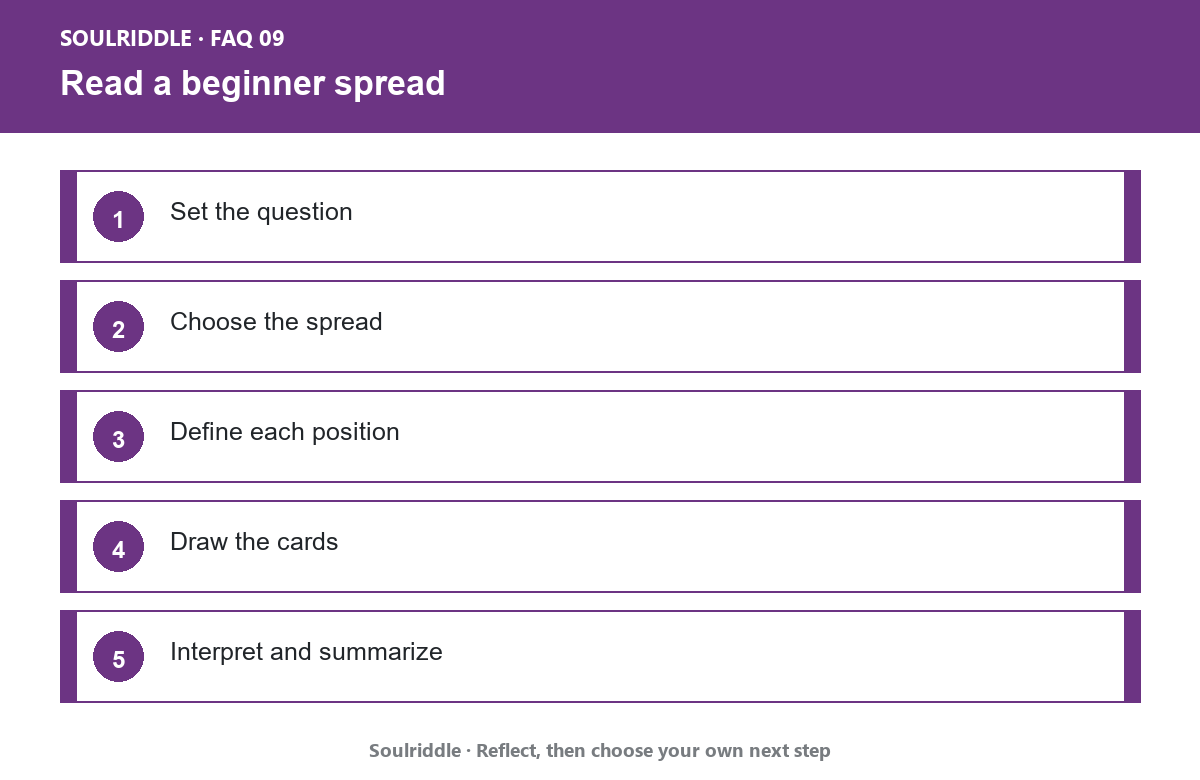
Choose a question and a simple spread. For each position, write down what the position means before drawing. Draw the cards, then interpret each card in relation to its position and to the overall question. Ask the AI to explain how the cards interact rather than just listing separate meanings. After the reading, write one sentence that summarizes the main theme and one small action that follows from it.

What Is a Tarot Spread, and Which One Should Beginners Try?

Open-license image: Three-Card Spread — CarbonNYC [in SF!] — CC BY 2.0. Source: flickr; full credit in 图片来源与授权.csv.

What to avoid

Do not use a large spread before you are comfortable reading a small one. Avoid changing the meaning of a position to force a preferred answer. Do not ask a spread to predict a specific event or replace a difficult decision. If a card does not seem to fit, say so instead of inventing a strained connection.
What Is a Tarot Spread, and Which One Should Beginners Try?

Read a beginner spread

A prompt you can adapt

I used a three-card Past, Present, Future spread with [deck]. The cards are [card names and orientations]. My question is [question]. Please interpret each card in its position, explain how the three cards relate, and ask two reflective questions.

Key takeaway

Key takeaway: A spread assigns a role to each position so several cards can answer one question together. Three cards are a good starting point.

Source

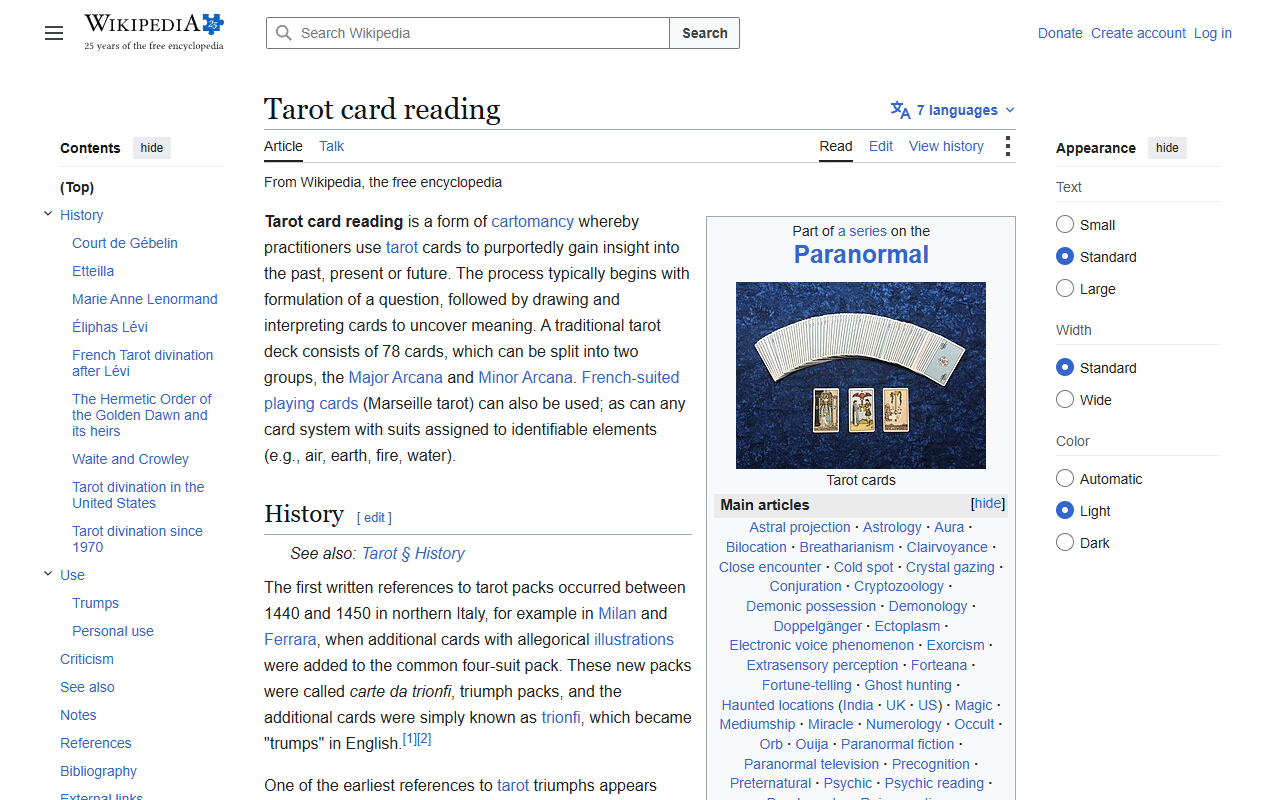
Source page: Tarot card reading - Wikipedia

Open source page: view the linked page

Open source ↗
What Is a Tarot Spread, and Which One Should Beginners Try?

Source page screenshot: Tarot card reading - Wikipedia

Explore prompts

Put the guide into practice

Find a community prompt, then adapt it to the context you already have.

Browse all prompts →

In this answer

1. Short answer2. Why this matters3. How to approach it4. What to avoid5. A prompt you can adapt6. Key takeaway7. Source

Continue learning

How Do Transits Differ From a Natal Chart Reading?How Do You Ask a Clear Question for an I Ching Reading?What Do Changing Lines Mean in the I Ching?