Soulriddle FAQ · 13 of 25
What Do Changing Lines Mean in the I Ching?
A practical, beginner-friendly answer for using AI and divination as a tool for reflection.
Short answer
Changing lines are the active lines in a hexagram. They shift from yin to yang, or from yang to yin, and lead to a related hexagram. Read the original hexagram as the present pattern, then consider the changing-line text and the resulting hexagram as ways of exploring movement in the situation. The changing lines point to where the reading is most dynamic, so they often deserve special attention rather than being skipped over.
Why this matters
Without the changing lines, a hexagram can look static. The changing lines show the points of movement, tension, or potential transformation. The resulting hexagram then gives a second perspective on where the situation may be heading. Reading all three layers, original hexagram, changing lines, and resulting hexagram, creates a more complete reflection than reading the first hexagram alone.
How to approach it
After casting, note which lines are changing and their positions. Ask the AI to explain the original hexagram as the current pattern, then discuss the specific changing lines, and finally describe the resulting hexagram as a related direction. Tie each layer back to your question. Ask what changes if you act or refrain from acting, rather than asking for a definite outcome. If several lines are changing, focus first on the most relevant ones or ask for a summary of the movement.
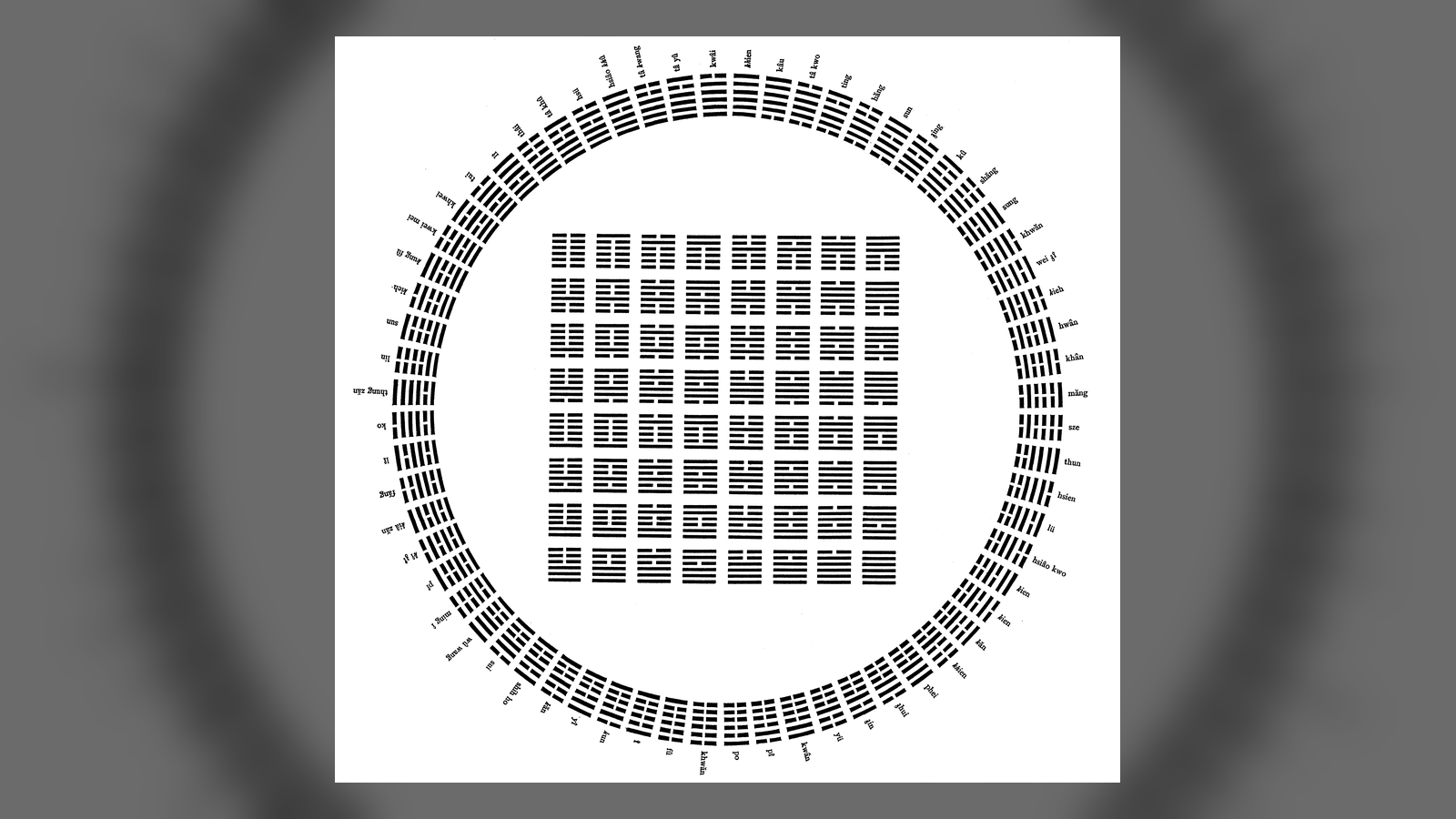
Open-license image: Fuxi order grid and circle (SBE vol. 16, 1882) — James Legge — Public Domain. Source: Wikimedia Commons; full credit in 图片来源与授权.csv.
What to avoid
Do not ignore the resulting hexagram or treat it as a simple future prediction. Avoid reading the changing-line text without relating it to the original hexagram and your question. Do not force every line to apply literally. If the language feels obscure, ask for several possible meanings instead of choosing the most alarming one.
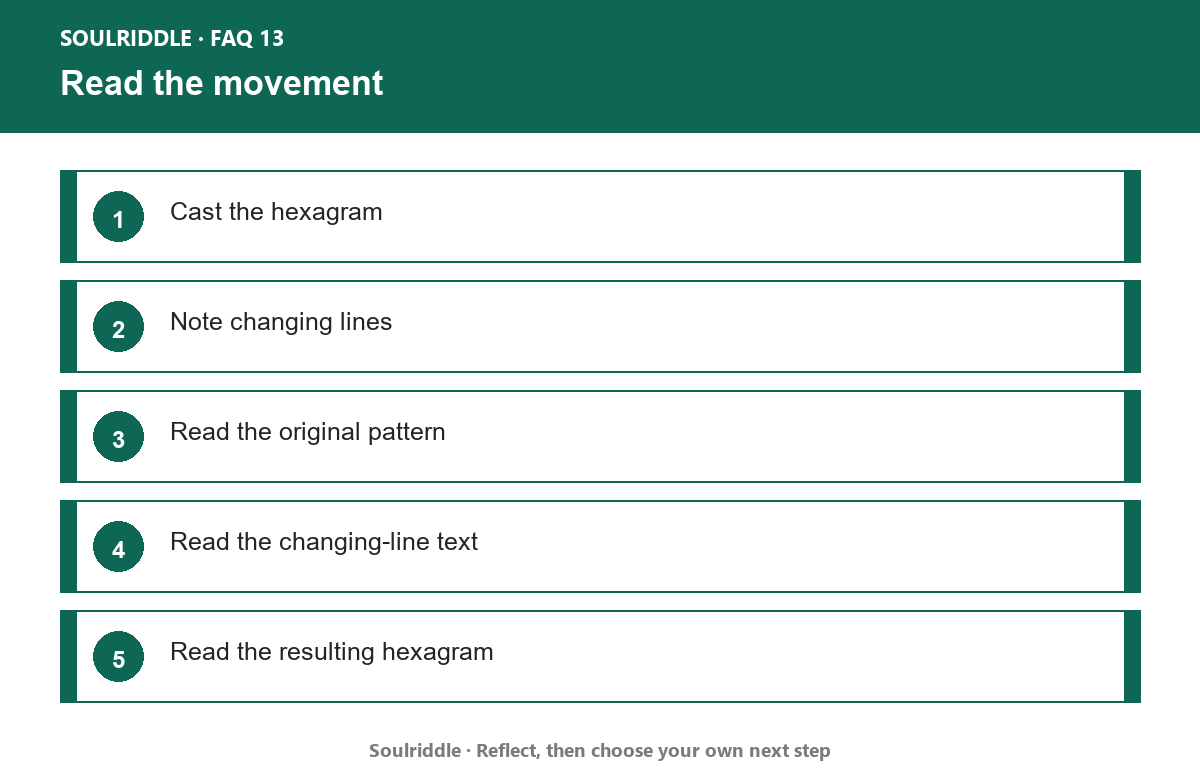
Read the movement
A prompt you can adapt
I cast [hexagram] with changing lines [line numbers]. My question is [question]. Please interpret the original hexagram as the present pattern, explain the changing lines, and describe the resulting hexagram as a direction. Offer two possible ways the situation could move, without making a definite prediction.
Key takeaway
Key takeaway: Changing lines mark movement. Read the original hexagram, the changing lines, and the resulting hexagram together to see the pattern in transition.
Source
Source page: I Ching with Clarity: Hexagrams and Changing Lines (practice guide)
Open source page: view the linked page
Open source ↗
Source page screenshot: I Ching with Clarity: Hexagrams and Changing Lines (practice guide)