SoulRiddle
HomeExploreAgentsRankingLearnDocs
Log in

Choose how to continue

No signup needed to explore.Other options
Menu
HomeExploreAgentsRankingLearnDocs

Soulriddle - AI prompt community

DisclaimerPrivacyTermsCopyright

Learn

Divination & AI FAQ

AI Prompts & Tools
01What Are AI Divination Prompts?06How Do You Choose the Right AI Prompt for Your Question?07What Makes an AI Divination Prompt Clear, Specific, and Useful?08Which Personal Details Are Helpful to Include in an AI Prompt?16How Do You Customize a Community AI Prompt for Your Own Situation?17How Do You Know Whether a Community AI Prompt Is Worth Trying?22What Are AI Agents, and How Can They Support a Daily Reflection Routine?
Western Divination
02How to Use Tarot Prompts with ChatGPT09What Is a Tarot Spread, and Which One Should Beginners Try?10What Should You Include in an Astrology Birth Chart Prompt?11How Do Transits Differ From a Natal Chart Reading?15Can AI Help You Explore Numerology Without Making Absolute Claims?18Can AI Interpret a Single Tarot Card?19How Can AI Help You Understand the Major and Minor Arcana?20What Is Synastry, and How Can AI Help You Explore It?
Eastern Traditions
03I Ching vs. Tarot: Which Should You Choose?04What Is BaZi?12How Do You Ask a Clear Question for an I Ching Reading?13What Do Changing Lines Mean in the I Ching?14How Does BaZi Differ From Western Astrology?
Reflection, Safety & Practice
05How to Use AI for Self-Reflection Responsibly21How Can AI Help You Reflect on a Dream Without Overinterpreting It?23How Do You Turn an AI Reading into Practical Next Steps?24What Are the Limits of AI in Tarot, Astrology, and Divination?25How Can You Protect Your Privacy When Sharing Personal Details with AI?
Browse all 25 guides
01What Are AI Divination Prompts?02How to Use Tarot Prompts with ChatGPT03I Ching vs. Tarot: Which Should You Choose?04What Is BaZi?05How to Use AI for Self-Reflection Responsibly06How Do You Choose the Right AI Prompt for Your Question?07What Makes an AI Divination Prompt Clear, Specific, and Useful?08Which Personal Details Are Helpful to Include in an AI Prompt?09What Is a Tarot Spread, and Which One Should Beginners Try?10What Should You Include in an Astrology Birth Chart Prompt?11How Do Transits Differ From a Natal Chart Reading?12How Do You Ask a Clear Question for an I Ching Reading?13What Do Changing Lines Mean in the I Ching?14How Does BaZi Differ From Western Astrology?15Can AI Help You Explore Numerology Without Making Absolute Claims?16How Do You Customize a Community AI Prompt for Your Own Situation?17How Do You Know Whether a Community AI Prompt Is Worth Trying?18Can AI Interpret a Single Tarot Card?19How Can AI Help You Understand the Major and Minor Arcana?20What Is Synastry, and How Can AI Help You Explore It?21How Can AI Help You Reflect on a Dream Without Overinterpreting It?22What Are AI Agents, and How Can They Support a Daily Reflection Routine?23How Do You Turn an AI Reading into Practical Next Steps?24What Are the Limits of AI in Tarot, Astrology, and Divination?25How Can You Protect Your Privacy When Sharing Personal Details with AI?
25 practical guides

Clear, grounded introductions for using divination and AI as tools for reflection.

Soulriddle FAQ · 24 of 25

What Are the Limits of AI in Tarot, Astrology, and Divination?

A practical, beginner-friendly answer for using AI and divination as a tool for reflection.

Short answer

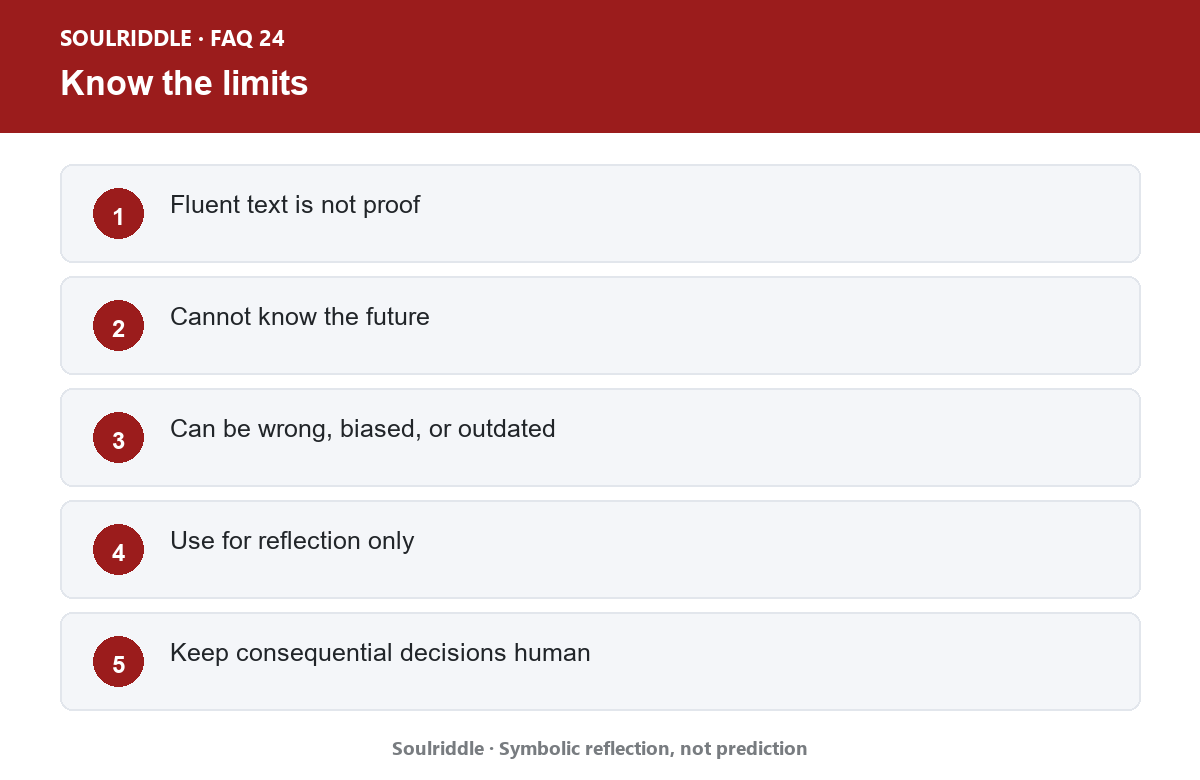
AI can generate fluent interpretations, yet it does not establish supernatural truth, know the future, or understand your life with human judgment. Its answers can be inaccurate, biased, outdated, or overly confident. Use it for creative reflection and questions, not for health, legal, financial, safety, or other consequential decisions. The strongest output is still a language pattern, not a source of certainty.

Why this matters

Because AI is trained to produce plausible text, it can sound authoritative even when it is wrong. In divination, that is especially risky because the subject already involves open-ended symbols and strong emotions. Recognizing the limits helps you keep the useful parts, imagination, structure, and questions, while rejecting the parts that claim to know what cannot be known or to replace professional judgment.

How to approach it

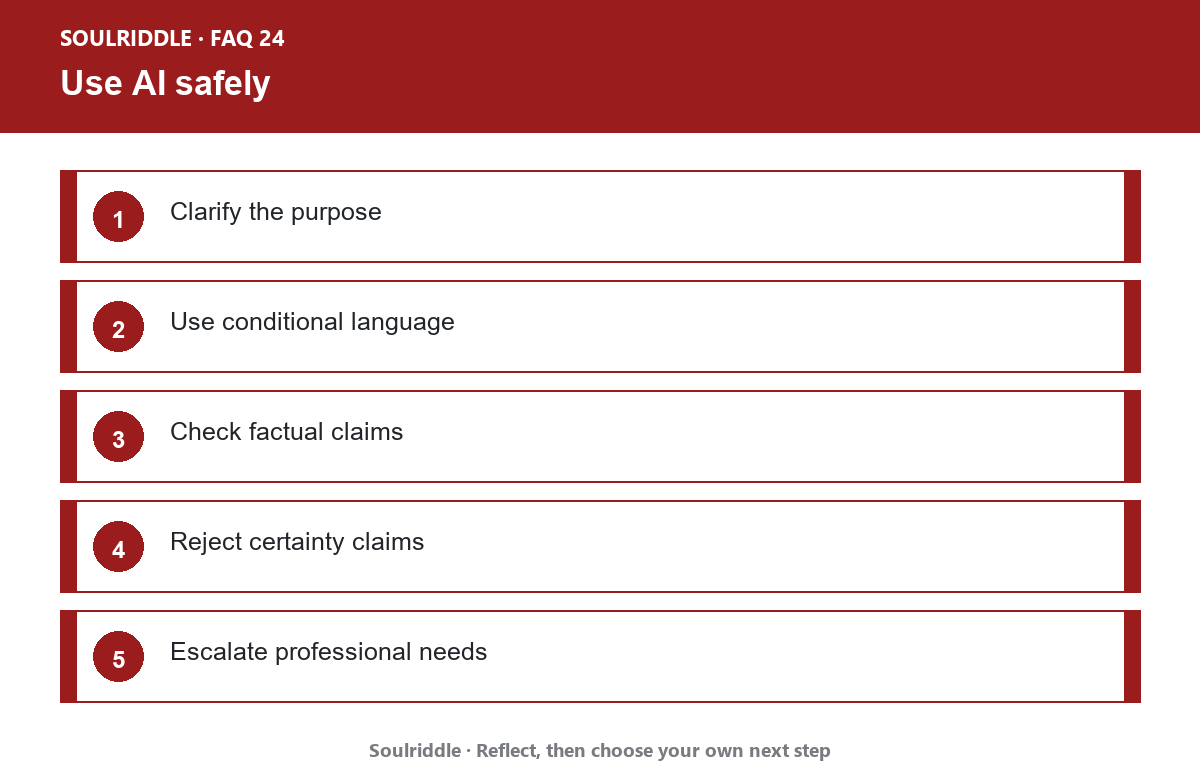
Treat the AI as a brainstorming or journaling tool. Ask for multiple interpretations, ask it to cite the tradition or method it is using, and check any factual claims against a reliable source. Use conditional language and request caveats. For consequential matters, use the reading only to clarify your own thinking, then consult a qualified human where the situation requires it.
What Are the Limits of AI in Tarot, Astrology, and Divination?

Know the limits

What to avoid

Do not rely on AI for medical, mental-health, legal, financial, or safety decisions. Avoid accepting a prediction, diagnosis, or guarantee simply because it is fluent. Do not share sensitive information in order to get a more personalized-sounding reading. If the output makes you feel certain about an uncertain outcome, that is a signal to slow down rather than act.
What Are the Limits of AI in Tarot, Astrology, and Divination?

Use AI safely

A prompt you can adapt

Please explain the limits of using AI for [Tarot / astrology / I Ching / divination]. List what AI can and cannot do, give examples of overconfidence or hallucination risk, and suggest how I can use it for reflection without replacing professional judgment.

Key takeaway

Key takeaway: AI can support symbolic reflection, but it cannot establish truth, know the future, or replace human judgment in consequential decisions.

Source

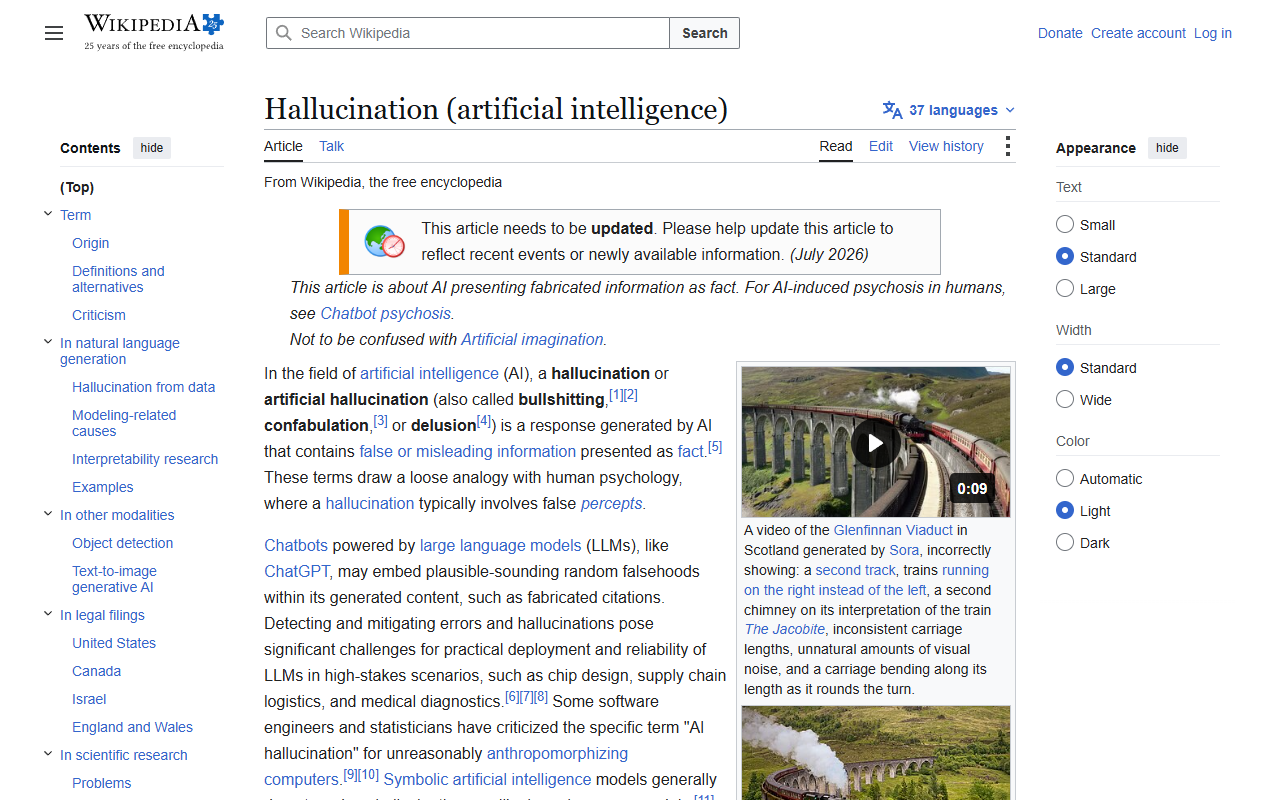
Source page: Hallucination (artificial intelligence) - Wikipedia

Open source page: view the linked page

Open source ↗
What Are the Limits of AI in Tarot, Astrology, and Divination?

Source page screenshot: Hallucination (artificial intelligence) - Wikipedia

Explore prompts

Put the guide into practice

Find a community prompt, then adapt it to the context you already have.

Browse all prompts →

In this answer

1. Short answer2. Why this matters3. How to approach it4. What to avoid5. A prompt you can adapt6. Key takeaway7. Source

Continue learning

I Ching vs. Tarot: Which Should You Choose?What Is BaZi?How to Use AI for Self-Reflection Responsibly