Soulriddle FAQ · 02 of 25
How to Use Tarot Prompts with ChatGPT
A practical, beginner-friendly answer for using AI and divination as a tool for reflection.
Short answer
Start with one focused question, then draw the cards yourself or use a transparent random draw. Tell ChatGPT the deck, the card names, their positions in the spread, and the kind of response you want. Ask for possible interpretations, reflective questions, and practical options rather than a single guaranteed answer. When the draw is visible and reproducible, the reading becomes easier to check and adjust. The value comes from connecting the imagery and position meanings to your actual question, not from asking the model to pretend it has drawn the cards.
Why this matters
Tarot works best as a tool for perspective when the reader knows what was drawn and where. If the AI invents cards or hides the draw, you cannot evaluate whether the interpretation fits the actual symbols. Being explicit about deck, orientation, and position also helps the model follow the tradition you are using and keeps the result grounded in a real reading rather than a generic collection of card meanings.
How to approach it
Decide on one question that is open enough to generate reflection but specific enough to be useful. Choose a simple spread, such as a single card or three cards. Draw the cards physically or with a transparent digital method, then write down each card, position, and whether you are using reversed meanings. In the prompt, state the question, deck, cards, positions, and the response format you want. Ask the AI to give several interpretations, mention how the cards could interact, and end with reflective questions. Keep the final choice of meaning and action with you.
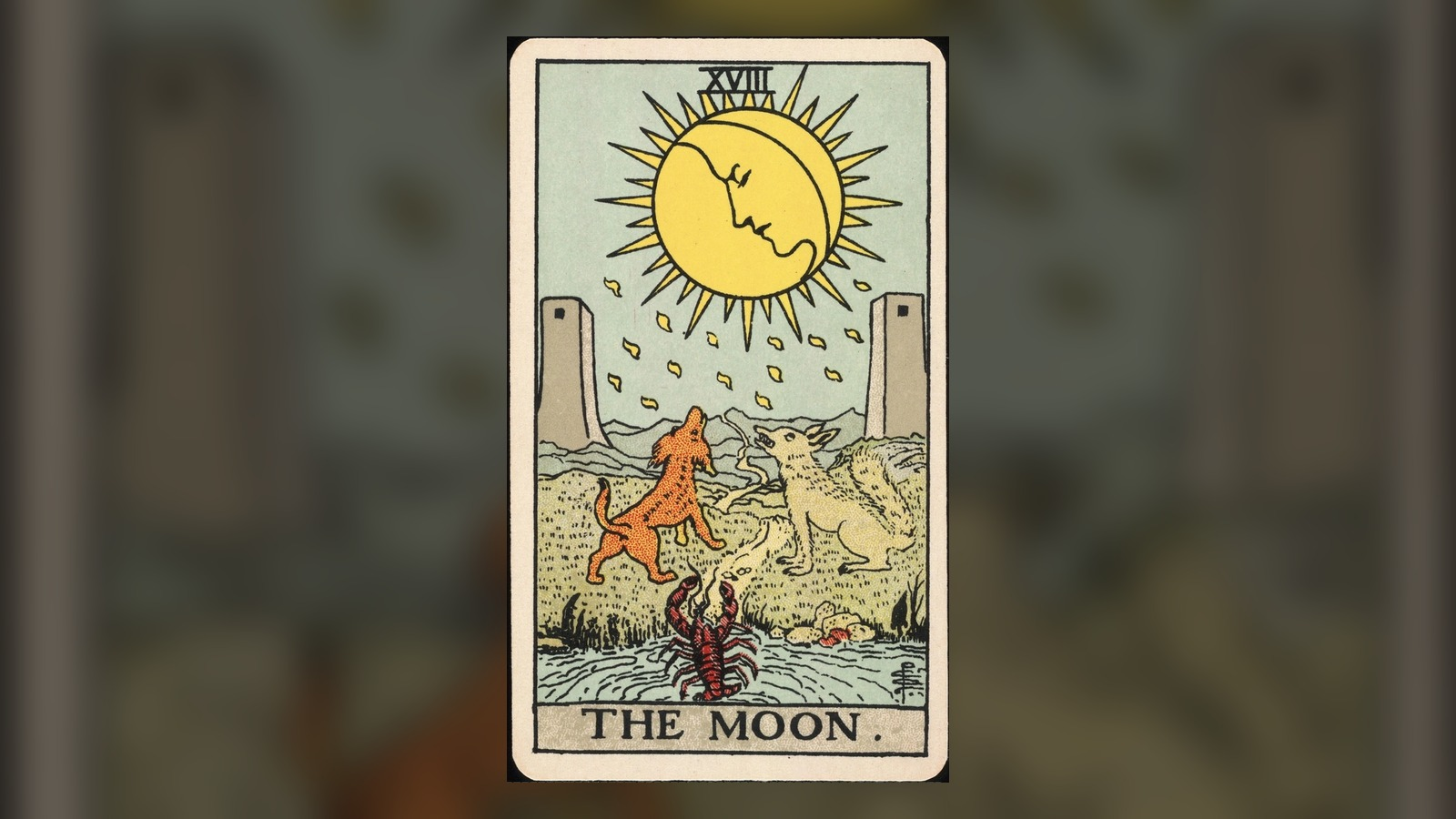
Open-license image: Moon card Waite-Smith tarot deck — Creator not listed by source — CC0. Source: rawpixel; full credit in 图片来源与授权.csv.
What to avoid
Do not ask for certainty, a yes-or-no guarantee, or a prediction about health, money, relationships, or legal outcomes. Avoid asking ChatGPT to draw cards for you without making the draw explicit and reviewable. Do not treat a polished response as more authoritative than a careful reading you have done yourself. If you are distressed or need practical support, seek a human professional instead.
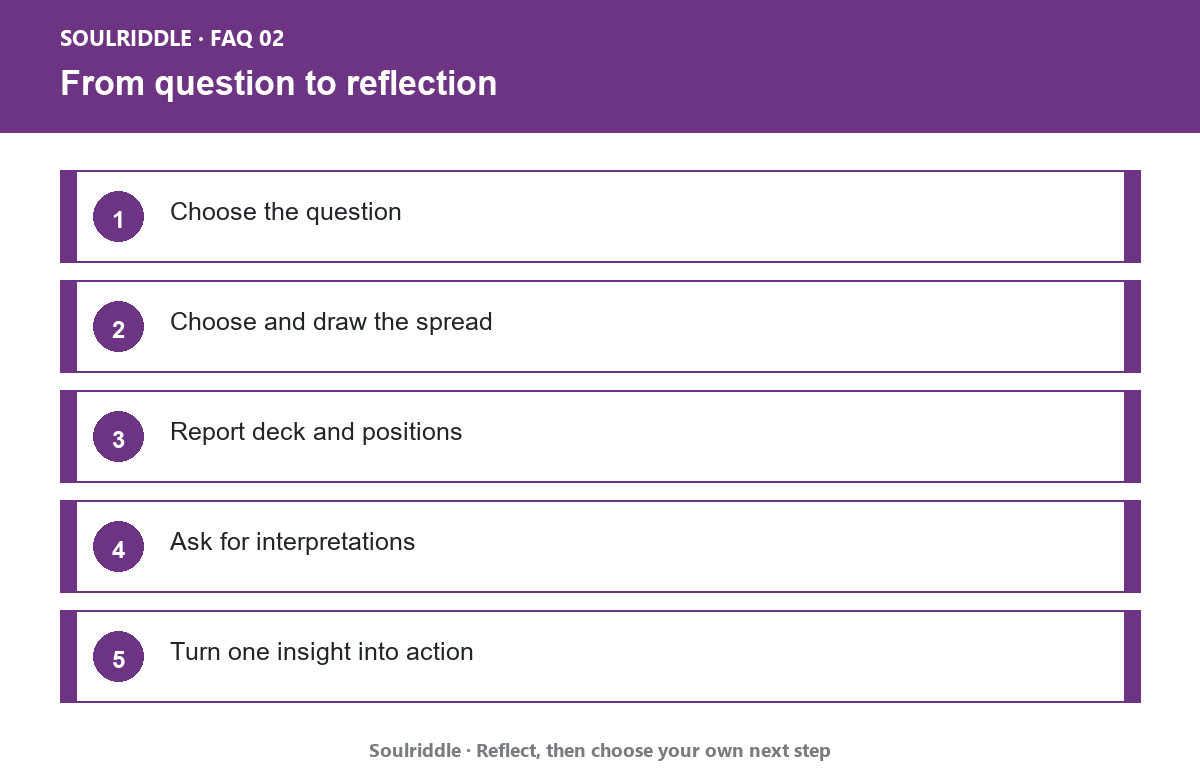
From question to reflection
A prompt you can adapt
I drew [card names and positions] from [deck name]. My question is [one focused question]. Please suggest three possible interpretations, explain how the cards connect to one another, ask two reflective questions, and propose one small next step. Use conditional language and do not make a definite prediction.
Key takeaway
Key takeaway: A good Tarot prompt is transparent about the draw, the spread, and the question. The AI helps you explore; it does not decide the meaning for you.
Source
Source page: Tarotap: ChatGPT Tarot Reading Guide (practice guide)
Open source page: view the linked page
Open source ↗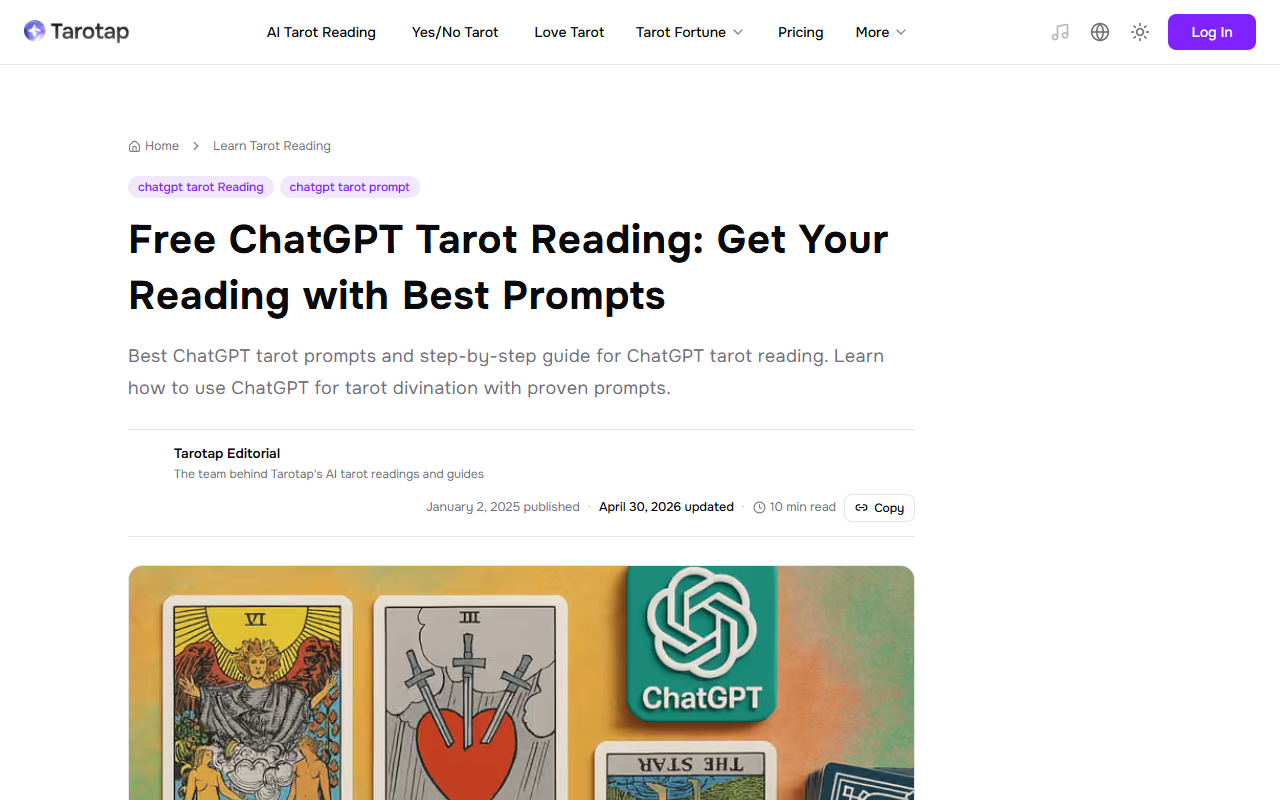
Source page screenshot: Tarotap: ChatGPT Tarot Reading Guide (practice guide)