Soulriddle FAQ · 06 of 25
How Do You Choose the Right AI Prompt for Your Question?
A practical, beginner-friendly answer for using AI and divination as a tool for reflection.
Short answer
First decide what you need: an explanation, ideas, reflection, comparison, or a plan. A prompt that clearly states that goal, provides the necessary context, and specifies the desired format, tone, and length is usually more useful than a broad question. Then review the result and refine the wording until it gives you something you can actually use. Choosing the right prompt is less about finding a magic phrase and more about making your intent visible to the model.
Why this matters
Vague prompts produce generic answers because the model has to guess what you want. When you specify the output type, audience, tone, and constraints, you give the model a clearer target and make it easier to judge whether the answer is good. This is especially important in divination and self-reflection, where a request can mean either a poetic interpretation, a practical checklist, or an explanation of a tradition.
How to approach it
Write one sentence describing the result you want. If you need ideas, ask for alternatives. If you need reflection, ask for questions. If you need comparison, ask for a structured contrast. Add only the context that matters, then request a format such as bullets, a table, or three short paragraphs. Test the prompt once, read the output, and change the words that caused confusion. Keep the most useful version for reuse.
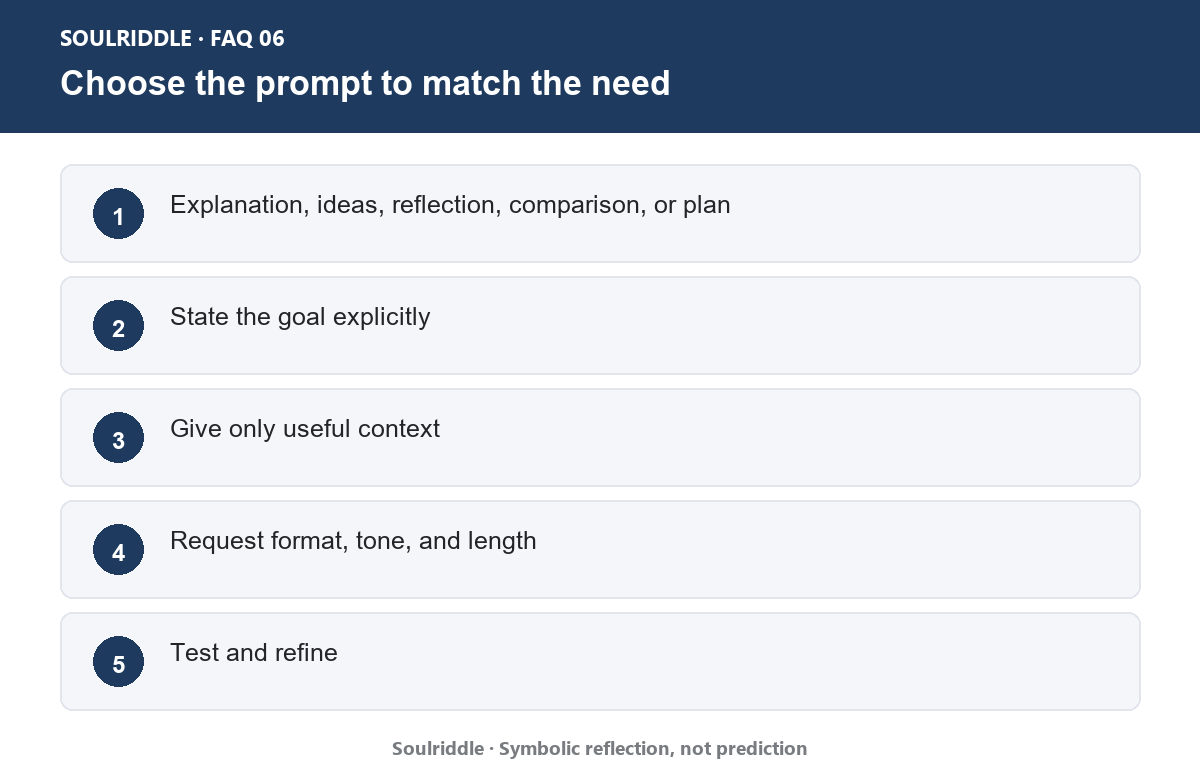
Choose the prompt to match the need
What to avoid
Do not combine several goals in one prompt, such as asking for both a prediction and a neutral explanation without separating them. Avoid giving too little context and then being surprised that the answer is vague. Do not treat the first result as final, and do not add so many constraints that the model cannot follow them all.
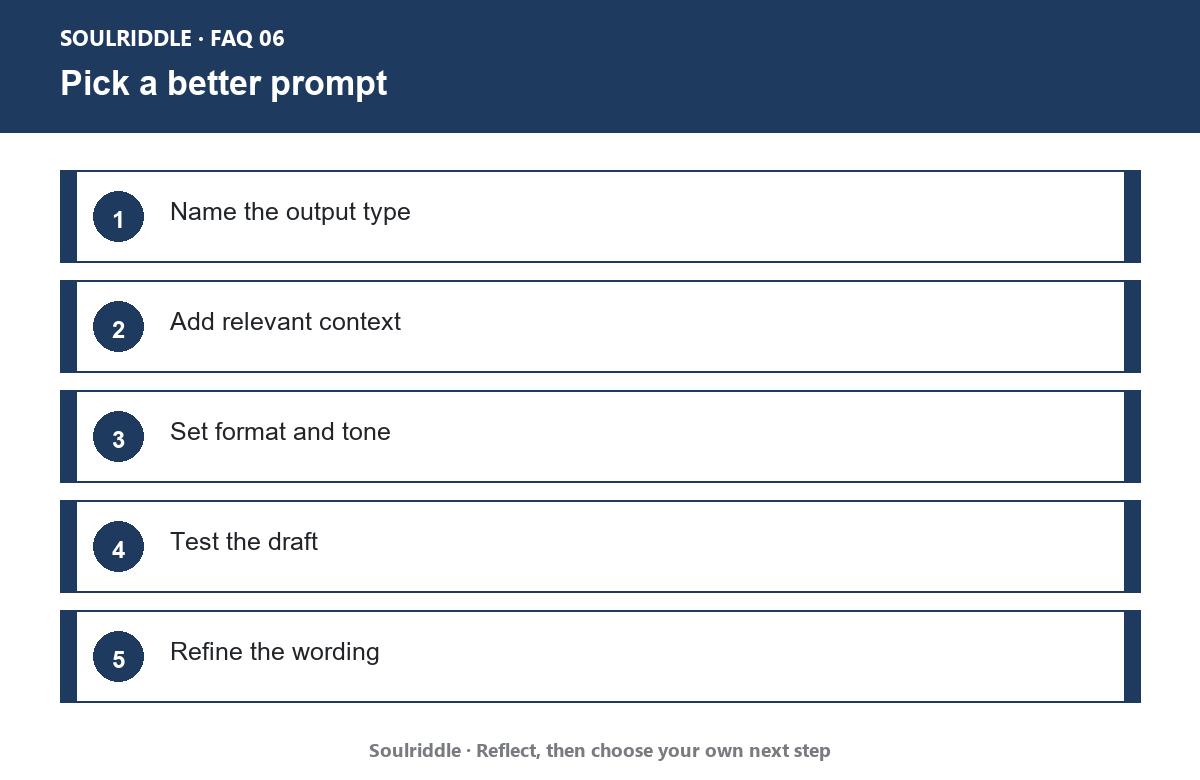
Pick a better prompt
A prompt you can adapt
I need [explanation / ideas / reflection / comparison / plan] about [topic]. My context is [brief relevant details]. Please answer for [audience] in [format], with [tone], and no more than [length]. If any assumption is needed, state it first.
Key takeaway
Key takeaway: The right prompt is the one that states your goal, context, and desired output clearly enough to be tested and improved.
Source
Source page: Prompt engineering - Wikipedia
Open source page: view the linked page
Open source ↗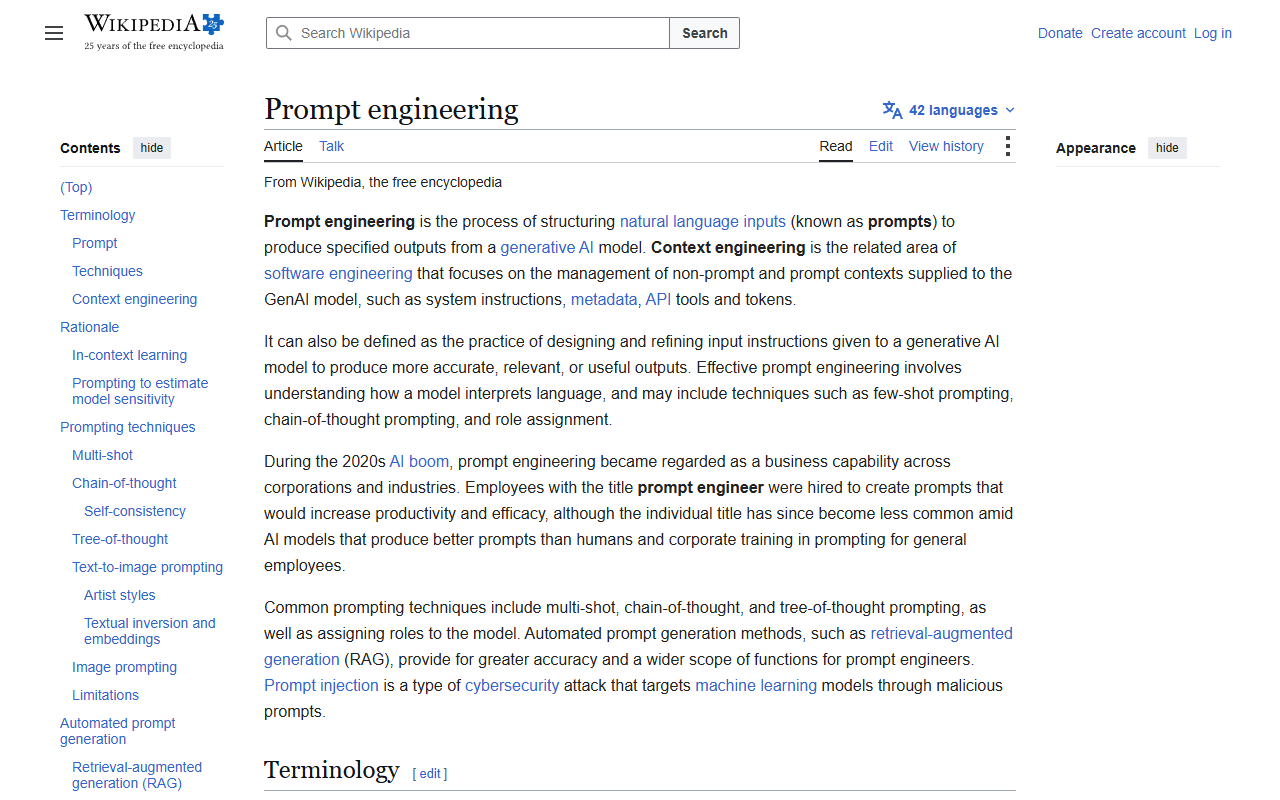
Source page screenshot: Prompt engineering - Wikipedia